
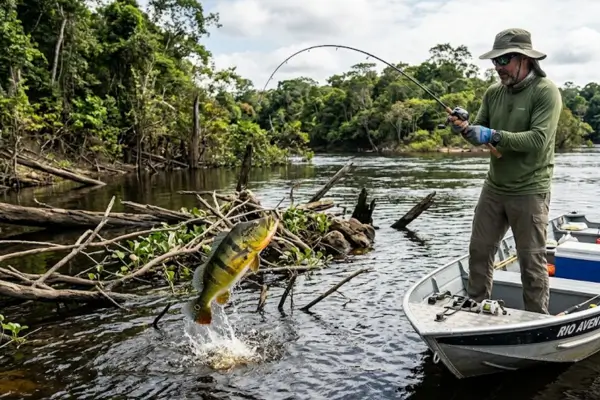
Boat fishing in rivers with the presence of peacock bass in structured environments requires a set of technical decisions that directly influence performance in the field. Among these decisions, choosing the right rod is one of the most important, especially when the goal is to work with precision in areas filled with natural obstacles such …

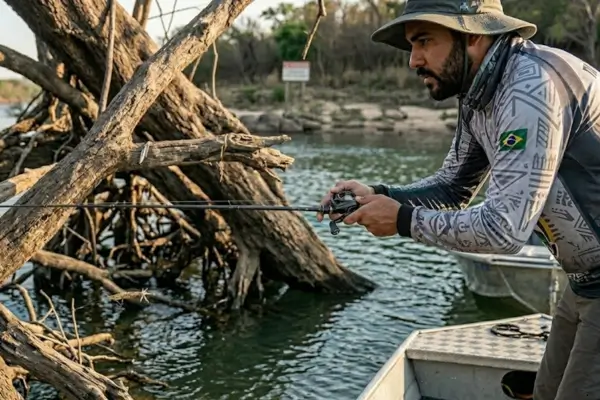
Casting control is an essential skill for fishing near logs, submerged branches, and natural underwater structures. In environments filled with obstacles, precision becomes more important than simply achieving long casting distance. In these situations, small mistakes in direction, force, or trajectory may cause the lure to hit branches, lose presentation efficiency, or completely miss the …
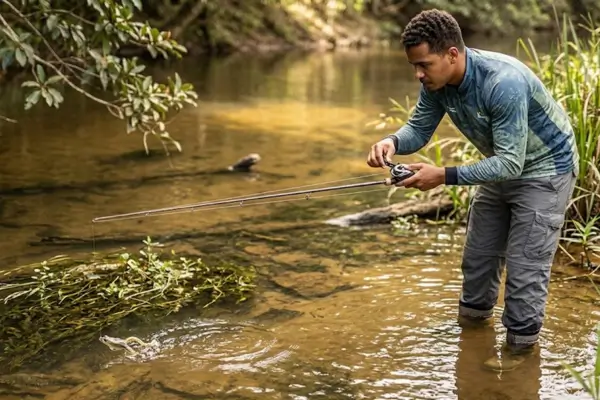
Fishing for trahira in shallow waters requires constant attention to lure retrieval rhythm. In low-depth environments, every movement of the presentation becomes more noticeable, making speed control a key factor for improving fishing efficiency. Trahira often respond differently depending on lure movement, environmental conditions, and activity levels throughout the day. Because of this, varying retrieval …
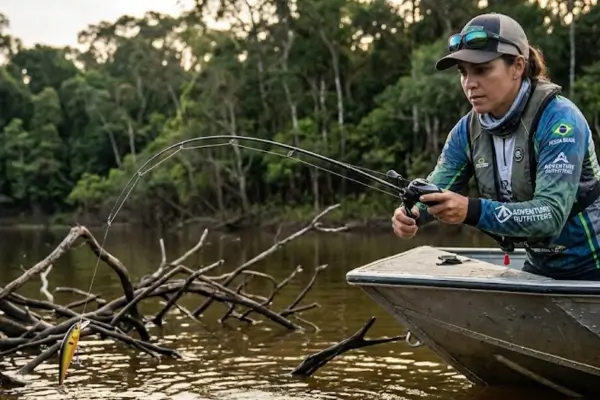
Lure working in areas with submerged brush requires constant attention to how the lure moves through the structure. This type of environment creates natural zones of shade, passage, and concentrated activity, where active fish tend to position themselves strategically. Presentation efficiency depends on the combination of boat positioning, depth control, working rhythm, and continuous reading …
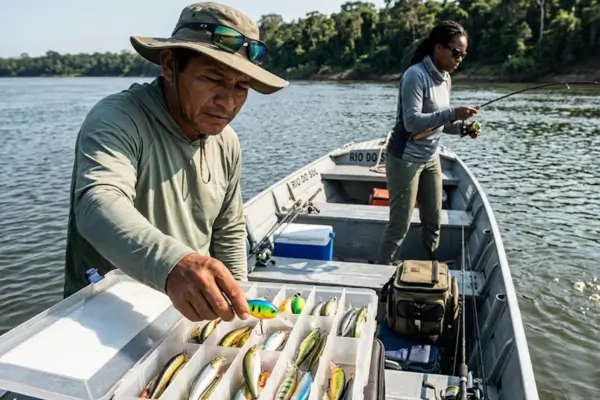
The use of mid-depth lures in boat fishing is a highly effective strategy when fish are distributed in intermediate layers of the water column. This situation is common in river environments with variable depth, moderate current, and submerged structures that directly influence fish behavior. Mid-depth lures operate in a strategic zone between the surface and …
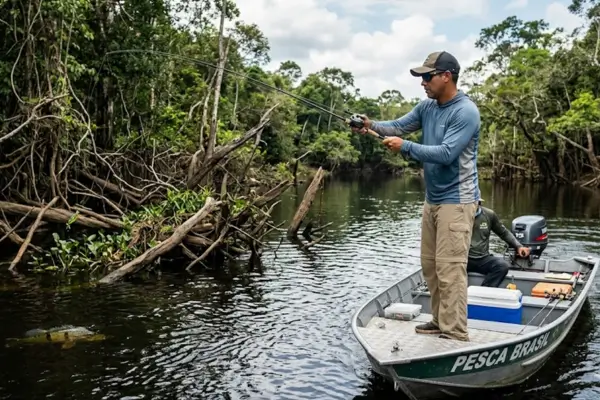
Precise casting in boat fishing in rivers with submerged structures is an essential skill when targeting tucunaré in structured environments. This type of setting requires technical control, as small errors in lure placement can reduce presentation efficiency. Precision depends not only on casting technique but also on environmental reading, boat positioning, and coordination between equipment …
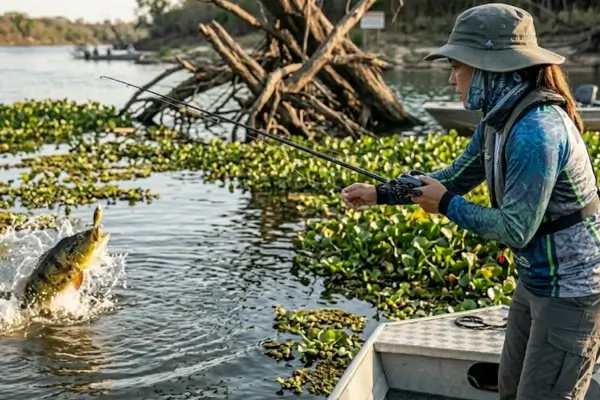
Using topwater lures in areas with floating vegetation is one of the most effective strategies for boat fishing in rivers, lagoons, and reservoir backwaters. Environments with surface cover often concentrate active fish near the top layer of the water, creating excellent opportunities for precise presentations and controlled lure movement. Under these conditions, lure action must …
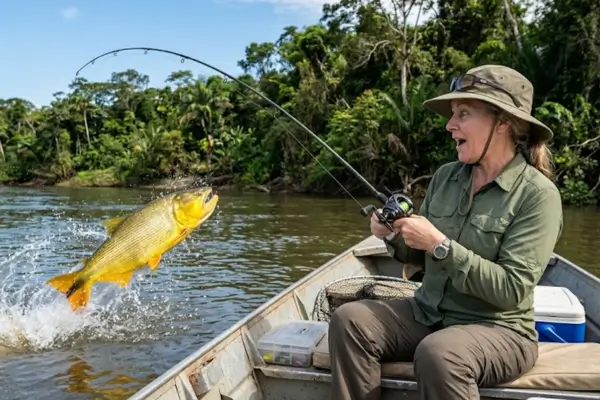
Boat fishing in deep rivers where golden dorado are present requires a combination of technique, environmental reading, and proper equipment selection. Among all components of the setup, the fishing line plays a central role in overall performance. Braided lines stand out in this scenario for offering high strength, sensitivity, and consistent performance in situations where …
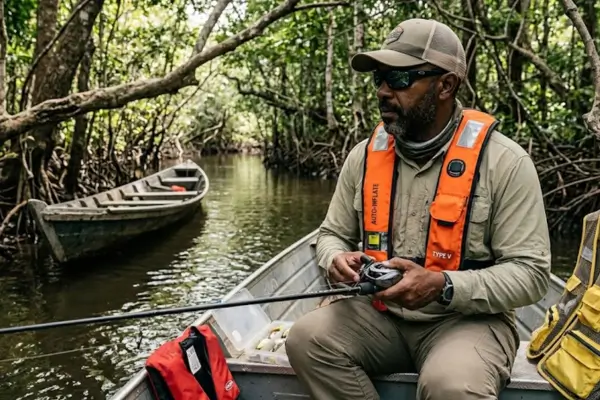
Boat fishing in rivers with narrow navigation sections requires a high level of organization inside the vessel. The limited space, combined with constant movement for casting and retrieving, means that every piece of equipment directly impacts overall performance. In this context, the life jacket is no longer just a support item but becomes part of …
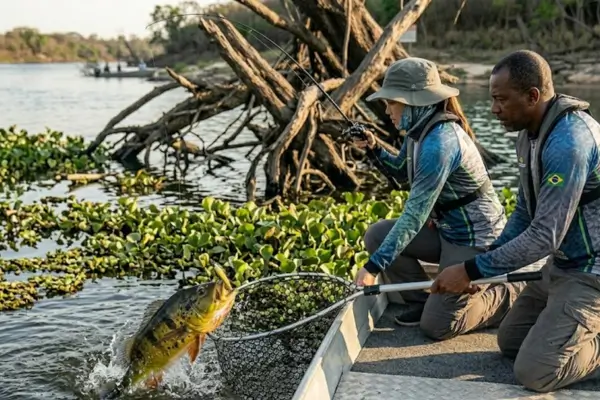
Landing fish in rivers filled with submerged structures requires constant attention, equipment control, and the ability to adapt throughout the entire process. In environments with logs, submerged branches, rocks, and underwater vegetation, the work does not end after the hookset. In many cases, the following moments become the most important for maintaining control of the …